
Baelor I Targaryen (reigned 161 to 171 AC), Baelor the Blessed, was the septon-king who forgave Dorne his brother’s murder, walked into a pit of vipers to free his cousin, locked up his own sisters, and starved himself to death in a forty-day fast. To the smallfolk he was a saint. To others he was the first sign that Targaryen piety could be its own kind of madness. He is also the king credited with the Great Sept of Baelor in King’s Landing. The truth is more interesting than either label.
The Snake Pit
Baelor was crowned at seventeen after his brother Daeron I was killed in Dorne under a peace banner. The realm wanted war. Baelor instead pardoned the fourteen Dornish hostages his uncle Viserys had imprisoned, forgave his brother’s killers, and walked the Boneway barefoot in sackcloth while the hostages rode horses.
At House Wyl’s stronghold he pleaded for the release of his cousin Prince Aemon the Dragonknight, who was being held in a cage. On his return he found the cage hung over a pit of vipers, and Lord Wyl gave him only a key. Baelor climbed in. Sources differ on whether he was bitten half a dozen times or half a hundred. Aemon pulled him into the cage, then leapt clear with Baelor on his back. Baelor took more than six months to recover, and the peace that followed included a betrothal between his cousin Daeron, the future Daeron II, and Myriah Martell of Dorne.
The Reign of Piety
Baelor ruled as if the Iron Throne were a sept:
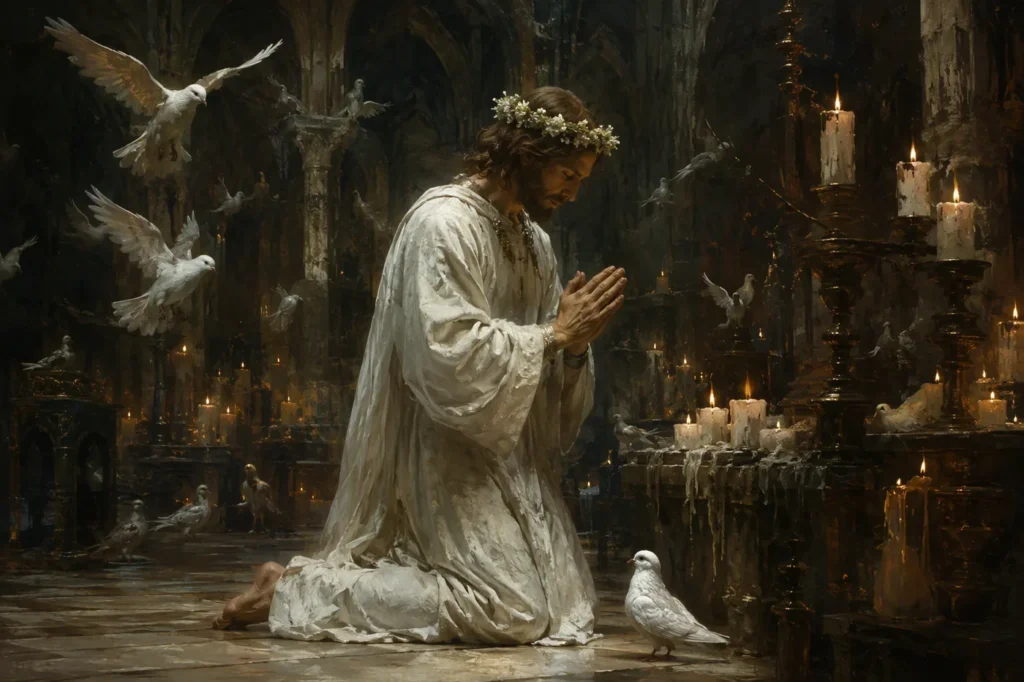
- He married his sister Daena in 160 AC but refused to consummate the marriage. As king he had the High Septon dissolve it, and he confined Daena, Rhaena and Elaena in a “Court of Beauty” in the Red Keep, later called the Maidenvault, to protect them from temptation. They stayed there for about a decade.
- He had nearly all copies of The Testimony of Mushroom burned for their bawdy content, and also ordered Septon Barth’s Dragons, Wyrms, and Wyverns burned, partly because of Barth’s reputed practice of the higher mysteries.
- He tried to replace messenger ravens with doves.
- He outlawed prostitution in King’s Landing and expelled more than a thousand women and their children from the city.
Death by Fasting
In 170 AC Daena gave birth to a bastard, Daemon Waters, and refused to name the father. Baelor fasted for forty days and nights. On the forty-first day, in 171 AC, he collapsed. Neither the Grand Maester nor the High Septon could save him. He was in his mid-twenties. Many say he starved himself to death. Others whispered that his uncle Viserys had poisoned him, either from impatience for the throne or to head off a civil war over Baelor’s plan to convert the North and Iron Islands by force. Tyrion disputes that, noting that Baelor died of fasting and that Viserys had served loyally as Hand.
Succession
Baelor left no children. Daena’s claim was set aside, and his uncle Viserys II took the throne, having already governed as Hand through Baelor’s six-month recovery and the Dornish settlement. Baelor’s own life is hard to sum up: genuinely gentle, genuinely brave, and genuinely unfit to rule. His forgiveness of Dorne was moral courage of a high order, and his governance was a decade-long prayer meeting. Daena’s son Daemon, fathered by Aegon IV, would grow up to be Daemon Blackfyre. Find Baelor on the interactive family tree, and see our king ranking.
FAQ
Who was Baelor the Blessed?
The ninth Targaryen king, who reigned from 161 to 171 AC. A devout septon-king, he made peace with Dorne, walked into a snake pit to free his cousin Aemon the Dragonknight, and died in a forty-day fast.
Did the snakes really refuse to bite Baelor?
No. The accounts say he was bitten, with sources differing on whether it was half a dozen times or half a hundred. He survived, though recovery took more than six months.
Why did Baelor lock up his sisters?
He had the High Septon dissolve his marriage to his sister Daena and kept her, Rhaena and Elaena in the Maidenvault in the Red Keep so they could not tempt him. They stayed there for about a decade.
How did Baelor the Blessed die?
He fasted for forty days in 171 AC and collapsed on the forty-first. Some suspected his uncle Viserys of poison, but Tyrion and others say the fast was enough.
Did Baelor have children?
No. He refused to consummate his marriage to Daena, and he died without an heir.
Related Pages
- Daeron I Targaryen
- Viserys II Targaryen
- Aegon IV Targaryen
- Every Targaryen king, ranked
- Interactive Targaryen family tree