Fire & Blood (2018) is George R.R. Martin’s in-world history of the Targaryen dynasty, covering Aegon’s Conquest through the regency of Aegon III, roughly 140 years. It is written as a real history book, with conflicting sources and deliberate unreliability, and it is the source material for House of the Dragon. A second volume is planned. Here is what to know before you read it.
What Fire & Blood Actually Is
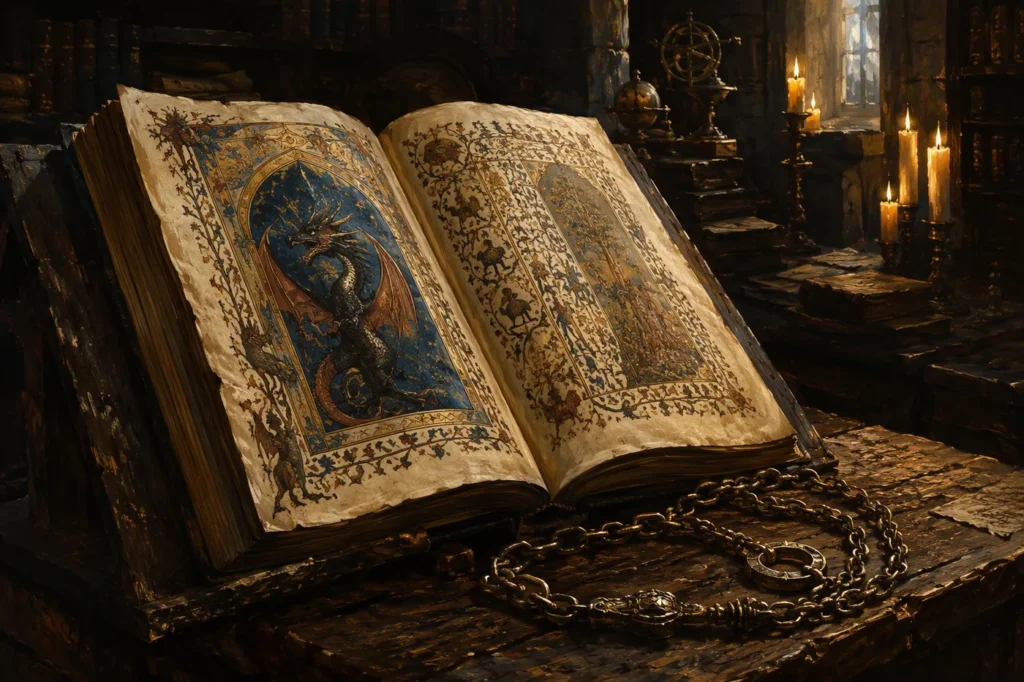
It is not a novel. Martin frames the whole book as a history compiled by Archmaester Gyldayn, assembled long after the events from primary sources that disagree with one another. The main ones are:
- Grand Maester Munkun, an official, dry chronicler.
- Septon Eustace, a pious chronicler of the same period.
- Mushroom, the court fool, whose account is filthy, detailed and often borne out.
The brilliant move is that where the sources disagree, Martin does not tell you which is true. The book is firm about what happened and deliberately murky about why. Every argument about whether Rhaenyra was a monster or a martyr is, at root, an argument about which source you believe.
What It Covers, Era by Era
| Era | Years | The highlights |
|---|---|---|
| Aegon’s Conquest | 2 BC to 37 AC | The Field of Fire, the conquest of six kingdoms and Dorne’s defiance |
| Aenys I and Maegor | 37 to 48 AC | The Faith Militant revolt and Maegor’s cruelty |
| Jaehaerys I | 48 to 103 AC | The long golden reign, Good Queen Alysanne’s reforms and the Great Council of 101 |
| Viserys I | 103 to 129 AC | The succession arrangements that caused everything |
| The Dance of the Dragons | 129 to 131 AC | The heart of the book: the civil war between Rhaenyra and Aegon II |
| The regency of Aegon III | 131 AC onward | The broken boy king, the regents and Unwin Peake |
For the war itself, see our breakdown of who actually won the Dance.
Is It Worth Reading If You Have Seen House of the Dragon?
Yes, for three reasons.
- The show changes a lot. Alicent and Rhaenyra’s ages and friendship, the Velaryons’ appearance and the way key violence plays out all differ from the page, and the show must pick one version where the book offers several. Knowing both makes the arguments richer.
- The narrators are half the fun. Mushroom’s testimony is some of the funniest writing in the franchise.
- The chapters the show has not reached are potential future material. Aegon’s Conquest, Maegor’s reign, Jaehaerys’s fifty-five years and the regency are all there.
The Famous Problem: Gyldayn’s Blind Spots
Because Gyldayn is a character writing generations after the fact, the book has deliberate gaps and biases. He weighs the testimony of a fool against the testimony of a septon, repeats court gossip alongside official history, and speculates about figures like Nettles on thin evidence. Veteran readers treat the book like a crime scene: the truth is in what the sources disagree about.
Volume 2 Status
Martin announced in July 2017 that the history was too large for one book and would be published in two volumes. Volume 1 appeared in November 2018. A second volume, which would carry the history on past Aegon III, has not been published and has no release date as of October 2026. Our page on Fire & Blood Volume 2 covers what is known. To follow the dynasty the book covers, use the interactive family tree.
FAQ
Is Fire & Blood a novel?
No. It is an in-world history book, compiled by Archmaester Gyldayn, covering the Targaryens from Aegon I through the regency of Aegon III. Expect chronicle-style prose and conflicting sources rather than point-of-view chapters.
Does Fire & Blood cover the whole Targaryen dynasty?
No. Volume 1 covers about 140 years, from the Conquest through Aegon III’s regency. A second volume, which has not been published, is planned to continue the story.
Should I read Fire & Blood before watching House of the Dragon?
Either order works. The book is richer and more ambiguous, while the show streamlines events and reassigns some of them. Watching first spoils nothing essential.
Who is Mushroom in Fire & Blood?
The court fool of the Dance era and one of Gyldayn’s main sources. His account is salacious and vivid, and Gyldayn often finds it hard to dismiss.
Is Fire & Blood canon?
Yes, with a catch: the events are canon, but the narrators’ interpretations are deliberately unreliable. Where sources conflict, Martin leaves the truth open.